

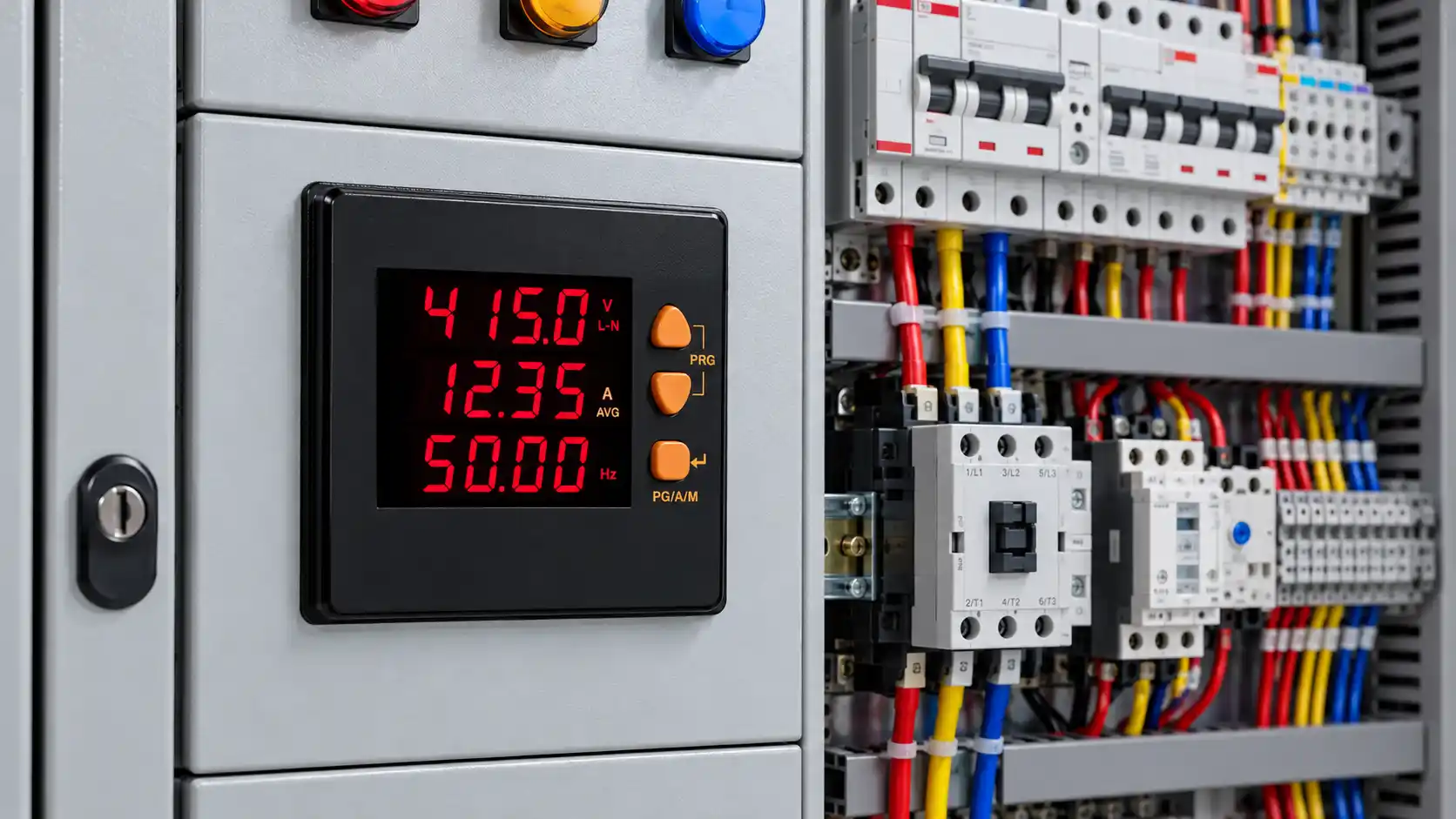
There are a number of parameters which must be evaluated when an electrical system is functioning normally within an industry. These are the voltage, current, frequency, power factor and energy usage. A Multi Function Meter allows these readings to be viewed from one instrument instead of installing a separate meter for each parameter. Such types of meters are usually installed in electrical panels, distribution panels, MCC panels, and automation panels. In the case of industries, an Industrial Multi Function Meter is the ideal solution for monitoring electricity performance and recognizing any abnormal readings while in use.
What Is a Multi Function Meter?
A Multi Function Meter, also called a Multifunction Meter, is a digital electrical measuring device designed to measure several parameters from an electrical circuit. The readings available depend on the model, but commonly include voltage, current, frequency, active power, reactive power, apparent power, power factor and energy.
A Digital Multi Function Meter usually has a front display from which the operator can select different readings. Three-phase models are widely used in industrial installations because they can monitor individual phases as well as overall electrical values.
One of the major distinctions between a multifunctional meter and a normal electric meter lies in the number of readings that one meter can take. Instead of requiring a different instrument for voltage, current, and power measurement, one meter will do the job.
How Does a Multifunction Meter Work?
The Multi Function Meter working principle starts with electrical signals taken from the circuit being monitored. The meter receives voltage through its voltage input terminals. Measurement of current can directly be made if the current value is within the allowable range of input. For larger currents as seen in industrial circuitry, a Current Transformer (CT) is used.
The electronic circuit inside the meter analyzes the signals received. It determines other parameters of electricity using the voltage and current measurements. The findings are then displayed on the screen.
For example, when the voltage and current of a three-phase system are measured, the meter can calculate power and power factor. If energy measurement is available, it also records the amount of electrical energy consumed over time.
Some models have communication facilities, allowing the readings to be sent to a PLC, SCADA system or energy management platform.
Measuring Voltage and Current
Voltage is connected to the appropriate input terminals of the meter. Current measurement depends on the meter and the application. In high-current systems, CTs are normally connected between the electrical circuit and the multi-function meter.
The CT reduces the high line current to a suitable measurement value. The CT ratio must be entered correctly in the meter. However, the value shown on the display will not be the true current reading. The system gives continuous voltage monitoring, and current measurement without the need for an operator to use another hand-held measuring tool for every reading.
Calculating Power and Energy Parameters
Once voltage and current are available, the meter can calculate different forms of electrical power. Active Power is mostly measured in kW while reactive power in kVAR and apparent power in kVA. Energy consumption is normally measured in kWh. This comes in handy when a facility wants to measure the amount of power being consumed by a specific piece of machinery, panel, or production line.
This means that a power monitoring meter provides more insight than simply energy measurement flowing in a circuit.
What Parameters Can a Multi Function Meter Measure?
The specificity of the multi-function meters parameters differ depending on the make and model. Standard Meters will give you the necessary readings for regular panel monitoring; whereas more sophisticated meters will have further electrical parameters monitoring
The readings include Voltage, current, Frequency, Active Power, Reactive Power, apparent power, power factor, and energy consumption. Two-phase models will show readings individually for each R, Y, and B phase.
Some devices will also display maximum and minimum readings, Demand or anything else. The technical specification is important in order to select a proper device, since two multifunction meters can measure differently.
Voltage, Current, and Frequency
Voltage, current, and frequency are basic measurements used for electrical monitoring.
Voltage tells the operator about the electrical supply reaching the load. Current gives an indication of the load being drawn by connected equipment.Sudden changes in current may warrant further inspection, especially when there is no change in the load being produced. voltage current frequency meter is important for systems that provide power to motors and other equipment designed to function at certain frequencies. It is convenient to monitor all three values from one instrument.
Power Factor, Power and Energy
Power meters are particularly relevant in industrial plants where motors, transformers and other inductive loads are used. The meter can display power factor along with kW, kVA and kVAR.
Active Power, expressed in kW, is the useful power being consumed. Apparent Power is expressed in kVA, whereas Reactive Power is expressed in kVAR.
The Multi Function Energy Meter also captures energy consumption in kWh. Such data can be compared to determine electricity consumption of different machinery during different shifts.
Where Are Multi Function Meters Used in Industrial Systems?
Multi Function Meter applications cover a wide range of electrical installations. These devices are commonly found in main LT panels, power distribution boards, motor control centres, generator panels and machine control panels.
A Multi Function Meter for Electrical Panel applications can be installed at the incoming supply to monitor the overall electrical system. Additional meters may be fitted on outgoing feeders when individual production areas or large machines need separate monitoring.
Manufacturing plants, processing units, workshops, commercial buildings and infrastructure facilities can all use multifunction meters where several electrical parameters need to be checked.
In automation systems, the meter can also be connected to a control or monitoring system when the selected model supports the required communication protocol.
Why Are Multi-Function Meters Important for Industrial Power Monitoring?
Electrical consumption can vary throughout the day. Machines may start and stop, production loads can change, and different sections of a plant may operate at different times. Looking only at the main electricity bill does not provide much information about what is happening at individual panels.
This is where industrial power monitoring becomes useful. The installation of a meter on a certain feeder will indicate the voltage, current, and power consumed on that feeder.
In the case where there is a sudden increase in the amount of current, the maintenance personnel can conduct an inspection of the equipment connected to the particular feeder. Also, the consumption of energy will provide the areas using more energy.
This will make inspection easy, since instead of going through different meters, one operator can just read the data on one display.
Multi Function Meter vs Separate Electrical Meters
Separate voltmeters, ammeters, frequency meters and power meters have traditionally been used in electrical panels. Each instrument performs a specific measurement and requires its own panel space and wiring.
A digital electrical meter combines several of these measurements into one device. The operator can select the required parameter from the display.
This can make the panel arrangement cleaner and reduce the number of individual instruments. It is also easier to have several electrical values available at one location.
However, a multifunction meter is not automatically suitable for every application. Some systems may require a dedicated instrument because of a specific accuracy, measurement range or application requirement. The decision should be based on the electrical system and the readings that actually need to be monitored.
Key Features to Consider in a Multi-Function Meter
Here are some things to consider when Multi Function Meter selection .
- Measurement parameters: Ensure that the meter offers all the measurements needed for the application.
- Voltage and current range: The meter must be able to accommodate the electrical supply that is being measured.
- CT/PT compatibility: For high-voltage or high current systems, CTs and PTs may be needed.
- Accuracy: Select an accuracy level which is suitable for general measurement, energy studies, or any other applications.
- Viewing: The readings shall be clearly visible and readable from the normal position at which the meter would be used.
- Meter Size: Verify the meter size and the panel opening prior to installation.
- Communication: In case it is required to transfer data into a PLC/SCADA system, verify the available communication ports.
- Installation: Verify the mounting method and auxiliary power source.
Selecting a multi-function meter features based only on the number of functions can create problems later. The electrical characteristics of the application should come first.
Communication and System Integration
An RS485 Multi Function Meter can be employed in instances whereby electrical readings have to be collected using another system. RS485 is widely used for industrial communication, whereas Modbus is usually employed as the communication protocol.
Modbus Multi Function Meters allow for the transfer of information like voltages, currents, power, frequencies and energy to a PLC or SCADA systems provided that the meter allows for that.
This setup is useful in plants with several electrical panels. Readings from different locations can be collected at a central point, reducing the need for manual recording.
The communication address, baud rate and other settings must be configured according to the connected system. The meter's register information is also needed when integrating it with PLC or SCADA software.
Conclusion
A Multi Function Meter incorporates various electrical quantities in one instrument. It may assist operators in monitoring voltage, current, frequency, power factor, power and energy without necessarily using various other individual instruments.
When it comes to choosing a Multi Function Meter for an industrial application, the factors to be considered include the voltage, current, CT/PT requirement, accuracy, display and communication capabilities of the meter. SS Electronics offers electrical monitoring solutions for industrial applications and can help users select an Industrial Multi Function Meter suited to their panel and monitoring requirements.
Frequently Asked Questions (FAQs)
1. What is a Multi Function Meter?
A Multi Function Meter is a digital electrical measuring device that measures multiple parameters, such as voltage, current, frequency, power factor, and energy consumption, using a single instrument.
2. How does a Multi Function Meter work?
A Multi Function Meter receives voltage and current signals from an electrical circuit. Its internal electronics process these signals, calculate electrical parameters, and display the readings for monitoring.
3. Where are Industrial Multi Function Meters used?
Industrial Multi Function Meters are commonly used in LT panels, distribution boards, motor control centres, generator panels, and machine control panels to monitor electrical performance.
4. Does SS Electronics provide Multi Function Meters for industrial applications?
SS Electronics offers electrical monitoring solutions for industrial applications and can help users select an Industrial Multi Function Meter according to their electrical panel and monitoring requirements.
5. How can SS Electronics help with Multi Function Meter selection?
SS Electronics can help users identify a suitable meter based on their required measurements and panel application. Buyers should confirm specific models, technical specifications, and availability directly with the company.
6. Which brands of Multi Function Meters are available through SS Electronics?
The provided company information does not specify particular meter brands. Contact SS Electronics to confirm available brands, models, measurement capabilities, and communication options.
7. What should I check before purchasing a Digital Multi Function Meter?
Check the measurement parameters, voltage and current ranges, CT/PT compatibility, accuracy, display, panel cut-out dimensions, and communication options such as RS485 or Modbus, if required.