

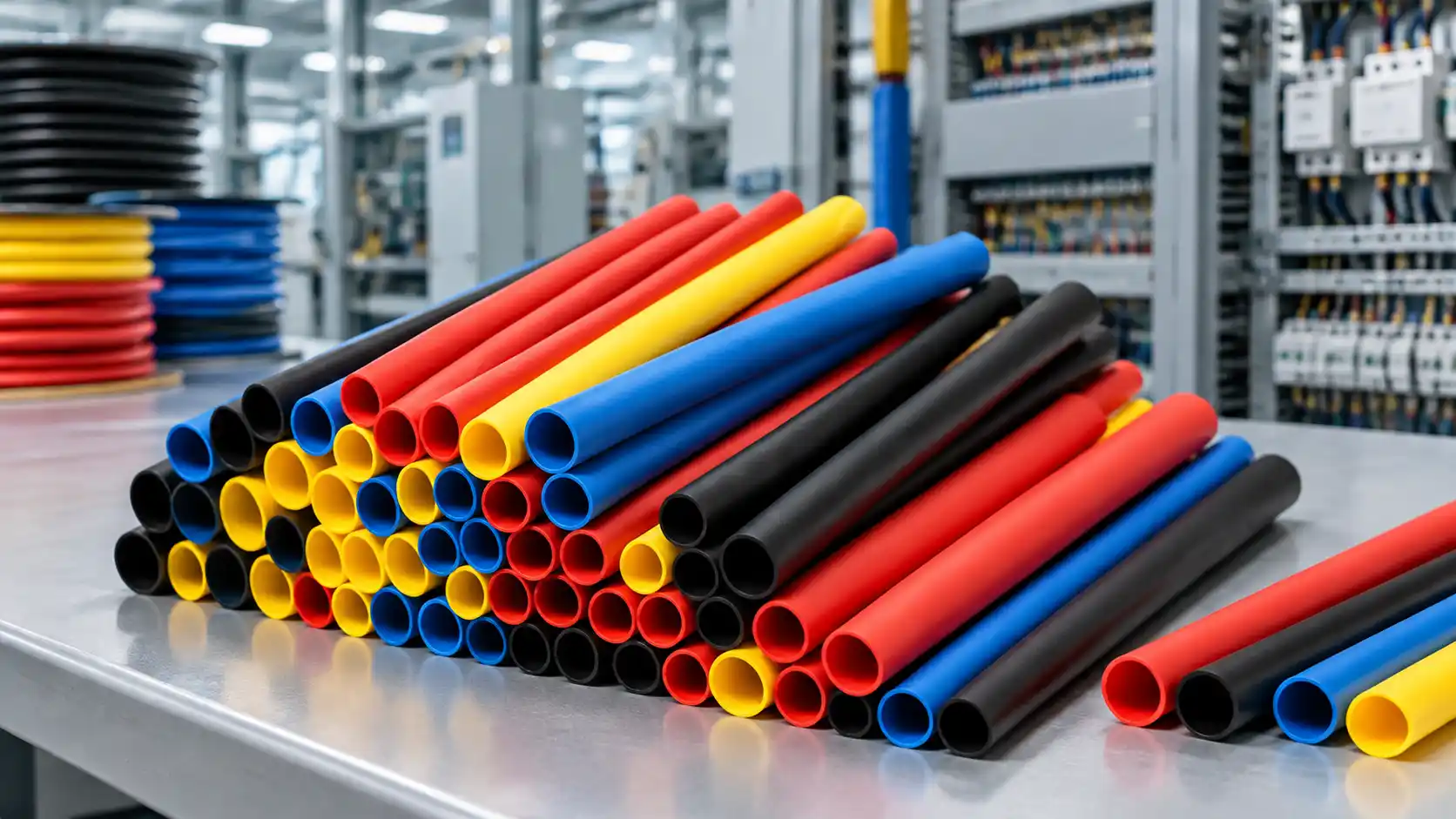
Most panel wiring doesn't fail because of the cable. It fails because whatever was supposed to protect the cable wasn't up to the job. A wire sleeve sits low on most people's priority list until something goes wrong, and by then you're already dealing with a breakdown, a safety report, or both. So here's a practical look at picking the right industrial wire sleeve — not the marketing version, just what the team at SS Electronics actually sees hold up once it's installed.
💡 Did You Know? Sleeving is older than most people assume. Telegraph operators in the 1800s wrapped bare copper in cloth or rubber for the same reason we use sleeves today — to stop wires touching and shorting each other out.
What Is a Wire Sleeve and Why Is It Used?
A wire sleeve is a cover you fit over wiring, either by sliding it on or shrinking it down. On paper that's a small thing. In practice it does a fair bit:
- Keeps a bundle of wires together instead of loose and tangled
- Sits on top of the cable's own insulation as a second layer
- Blocks dust, oil, and moisture from getting to the conductors
- Lowers the odds of a stray scrape or crush damaging the wire
- Makes a panel less of a headache to trace and service
It's not glamorous work, but it's usually the difference between wiring that lasts and wiring that doesn't.
Why Wire Sleeves Matter in Industrial Wiring
Machine rooms and control panels take a beating. Vibration, heat, sharp metal, parts that never stop moving — none of it's kind to bare cable. Get the industrial wire sleeve right and:
- Abrasion from frames or moving components stops being a problem
- The sleeve shrugs off the higher temperatures panels tend to run at
- Routing gets simpler, and so does the next inspection
- The cable underneath ends up lasting years longer than it would bare
None of this is complicated. It's just easy to skip when a project's on a deadline.
Common Types of Wire Sleeves
There's no single sleeve that works for every job — the right one depends on heat, flex, and how much punishment it needs to take. Three come up again and again:
- Heat shrink sleeves
- Braided wire sleeves
- Insulating and protective sleeves
Heat Shrink Sleeves
Apply heat and a heat shrink sleeve tightens down around the wire or joint until it's a snug, form-fitting cover. Common uses:
- Covering exposed joints and connections
- Adding strain relief at terminations
- Colour-coding circuits so they're easier to trace
- Sealing splices against moisture, on grades rated for it
Braided Wire Sleeves
A braided wire sleeve is woven rather than moulded, which is exactly why it bends and flexes so well. That makes it the natural pick when cables move a lot:
- Grouping several cables into one run
- Shielding wiring near moving machine parts
- Standing up to scraping in high-friction spots
- Letting you check the wires through the open weave, no unwrapping needed
Insulating and Protective Sleeves
This is the broader category, and here the material spec is everything. A quality sleeve, for example, is built around specific heat-and-chemical combinations rather than one generic formula that's supposed to fit everything. What to check:
- Insulation rating against your actual system voltage
- Thermal resistance suited to the ambient heat
- Mechanical toughness for wherever it's being installed
- Chemical compatibility if oils or solvents are around
Key Factors to Consider When Choosing a Wire Sleeve
Good wire sleeve selection isn't complicated, but it does mean checking a few things properly instead of guessing.
Sleeve Size and Cable Diameter
Nothing else matters if the wire sleeve size is wrong to begin with.
- Measure the wire or bundle diameter properly, don't estimate
- Leave a little room so it isn't a fight to fit
- Go by the manufacturer's chart, not guesswork
- Plan for extra cables now if you'll need them later
Temperature and Environmental Conditions
A heat resistant wire sleeve is only as good as how closely its rating matches the actual environment.
- Check the rated range against real operating temperatures, not averages
- Account for humidity, moisture, or washdown routines
- Confirm chemical resistance near oils, coolants, or solvents
- Don't overlook dust and particulates on-site
Flexibility and Abrasion Resistance
Tight routing or constant machine movement calls for a flexible wire sleeve that can take repeated bending without wearing thin.
- Pick flexible materials wherever there's regular bending or vibration
- Put abrasion resistance first near sharp edges or moving parts
- Match flexibility to how tight the actual routing is
- Check flex-cycle ratings where movement never really stops
Electrical Insulation Requirements
Not every electrical wire sleeve gives you electrical insulation. Some are purely mechanical, and the datasheet is the only place that tells you which.
- Look for the dielectric rating on the spec sheet
- Match it against your system's actual voltage
- Don't lean on the sleeve if the primary insulation is already marginal
- Check it against whatever certification your industry needs
Common Industrial Applications of Wire Sleeves
Wire sleeve applications turn up wherever wiring needs to stay organised and protected, which in practice is most industrial settings:
- Control panels and electrical enclosures
- Industrial machinery and production lines
- Automation systems and robotic assemblies
- Electrical cabinets across manufacturing plants
- Wiring harnesses in machines and vehicles
- Power distribution and switchgear setups
- Instrumentation and sensor cabling in process plants
Each of these puts its own kind of stress on a sleeve, which is exactly why one generic choice rarely covers them all.
💡 Did You Know? The weaving used in braided sleeves wasn't invented for electrical work at all. It came from rope-making and textile trades, long before anyone applied it to cable protection.
Common Mistakes to Avoid When Selecting Wire Sleeves
Even people who do this often enough still get wire sleeve selection wrong sometimes:
- Picking a diameter that ends up too tight or too loose
- Skipping the temperature rating because it "should be fine"
- Buying on price without ever checking the spec sheet
- Missing flexibility needs where machinery is constantly moving
- Not checking chemical compatibility at all
- Installing without confirming the actual insulation rating
Fixing any of this at the design stage costs almost nothing. After installation, it usually costs a lot more.
What to Check When Choosing a Wire Sleeve Supplier
The supplier matters nearly as much as the product itself, especially on a bulk order.
- A genuinely wide range of materials and sizes, not just a few options
- Real technical datasheets instead of vague marketing lines
- Quality that stays consistent from one batch to the next
- People who can actually advise on fit, not just take an order
- Enough capacity to handle bulk and repeat orders on time
- Delivery timelines you can actually build a schedule around
A decent wire sleeve supplier is someone you can call with a technical question, not just a line item on a purchase order. It's the standard SS Electronics holds its own sleeve range too.
Conclusion
Picking the right wire sleeve comes down to knowing the environment it has to survive — heat, movement, chemicals, voltage — and matching a sleeve to that, not the other way around. Getting this match right is exactly what separates a reliable sleeve from one that fails early. For sourcing, SS Electronics' Wire Sleeve range is worth a look, backed by two decades in the trade.
Frequently Asked Questions
1. What is a wire sleeve used for?
Ans: Basically, it stops wires from getting scraped, overheated, or soaked, while keeping a tangle of cables looking like one tidy bundle instead of loose spaghetti. It's not a replacement for the cable's own insulation — think of it as backup. In a busy panel, that backup is often what keeps wiring running years longer than expected.
2. How do I choose the correct wire sleeve size?
Ans: Grab a caliper and actually measure the wire or bundle, don't eyeball it. Match that number against the manufacturer's chart, and leave a touch of room so you're not fighting to slide it on. Planning to add cables later? Size up now — redoing a finished run later is nobody's idea of fun.
3. Which wire sleeve is suitable for industrial wiring?
Ans: Honestly, there isn't one fixed answer. It comes down to what the job throws at the sleeve — heat, movement, insulation demands. Heat shrink handles terminations and sealed joints well; braided sleeves win once things start moving constantly. Skip the guesswork and just read the datasheet before deciding.
4. Can wire sleeves fully replace primary cable insulation?
Ans: Nope, and they were never meant to. What a sleeve gives you is backup protection against scraping, heat, and general exposure — not a substitute for the cable's own certified insulation. Especially at higher voltages, treat the sleeve as an extra layer on top, not the safety net itself.
5. How does temperature rating affect wire sleeve selection?
Ans: Pretty much everything depends on it. Rate a sleeve for less heat than it'll actually face, and it cracks or wears out faster than you'd like. Look past the average operating temperature too — occasional spikes matter more than people assume, and the rating needs to cover those, not just a typical day.
6. Why should I buy wire sleeves from a specialized industrial supplier?
Ans: Because they can actually back up what they're selling — real datasheets, consistent quality batch after batch, not guesswork. Suppliers like SS Electronics also help you land the right fit the first time, keep pace with bulk orders without dragging their feet, and stick to delivery dates a project can actually be built around.