

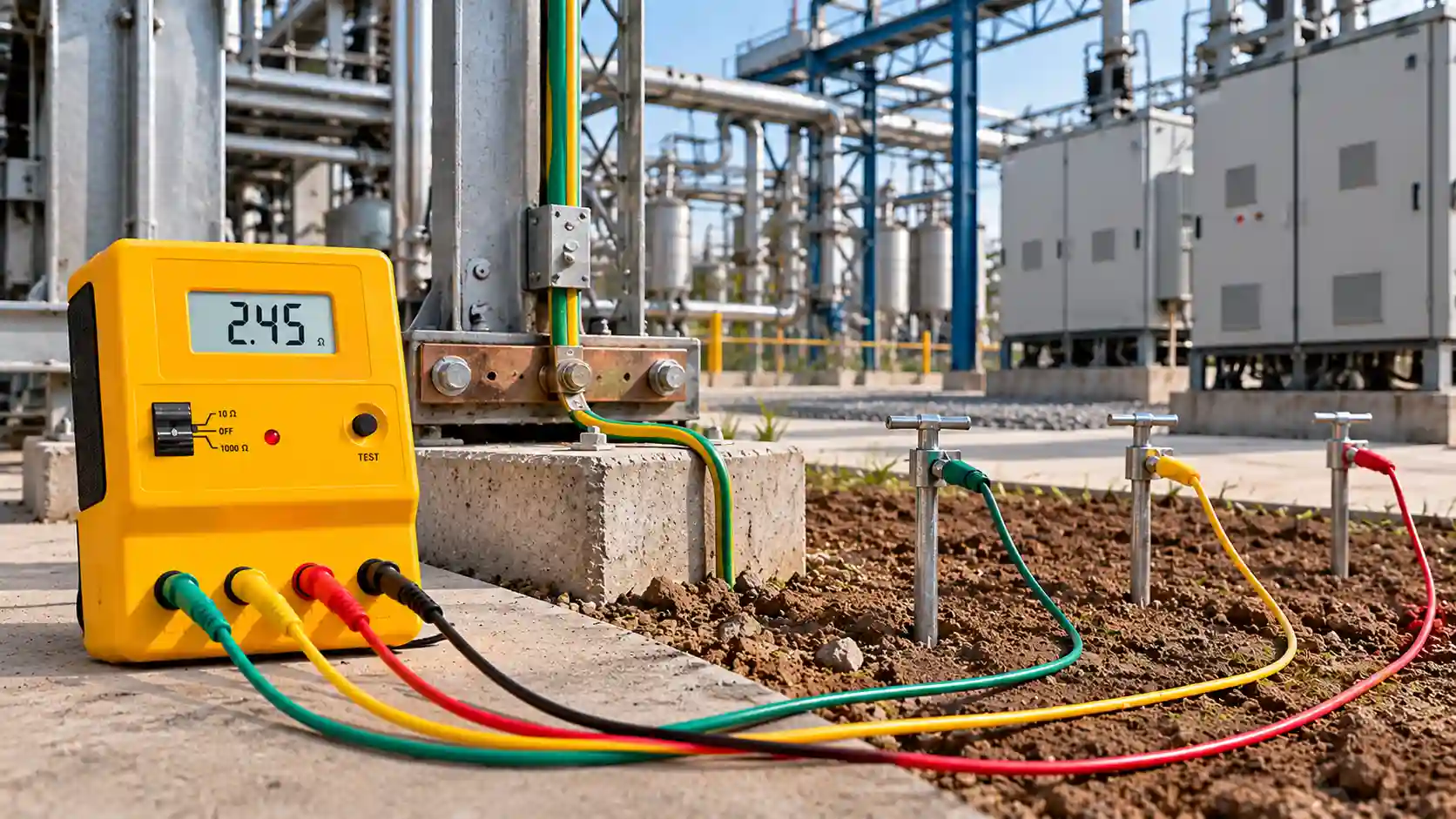
A drive trip for no clear reason. A panel burns out. Someone feels a tingle when they touch a cabinet. Nobody thinks about the earthing pit until days like these, and by then it's late. Reliable earth resistance measurement keeps a plant out of that spot, and it's the whole point of industrial earthing testing. But which earth tester should you buy? Well, that depends on your site, how your electrodes are laid out and what numbers you need to read.
What Is an Earth Tester and Why Is It Used?
Think of an earth tester as a gauge for the ground. It shows how easily fault current can get into the earth through an electrode. Lower is better. A high number means the current struggles, and that's when equipment and people are at risk. Plants use it in a few places:
- At installation, to see whether the new pit hits the design value.
- Commissioning, before anything goes live.
- During maintenance. This one gets skipped a lot, and it's a mistake, since corrosion and dry soil creep up on you quietly.
No testing means guessing. Soil dries. Joints rust. A tester gives you a number you can record and compare next year.
Did you know? “That the test stakes that are positioned too near to the electrode may provide erroneous readings, due to the overlapping of the zones? The distance between them becomes almost as important as the testing tool itself.”
Types of Earth Testers Used in Industrial Applications
One tester won't suit every site. Most industrial work uses three kinds, and each has a job it does best.
Digital Earth Tester
A digital earth tester puts the resistance value right on a screen. It's quick to set up and gives repeatable results, so it works well for routine inspections. Why do plant teams reach for it so often?
- The number is on screen. Done.
- Easy for a new technician to pick up.
- If you've got dozens of pits to check every quarter, it saves real time.
Clamp-Type Earth Tester
A clamp earth tester skips the stakes. You close the jaws around the earth conductor and it reads the loop resistance. Sounds too easy, doesn't it? Here's the catch: it needs other earth paths in parallel. Without them, there's no loop to measure. A few things to remember:
- Works nicely on earthing grids and multi-electrode systems.
- Rocky or paved ground? No stakes needed, so you save the hassle.
- Don't use it on a single, isolated electrode. No parallel return path means the ground resistance tester reading isn't true.
Three-Pole and Four-Pole Earth Tester
These two use the fall-of-potential method. You place auxiliary electrodes in the soil, pass a test current and measure the voltage drop.
- A three-pole is fast and common for checking one pit.
- Four-pole keeps lead resistance out of the result, and it can also measure soil resistivity. That's useful if you're planning a new earthing layout and need an earth resistance tester for it.
Key Factors to Consider When Choosing an Earth Tester
Before asking for any quote, run through four checks. Skip one, and you might end up with readings you can't rely on.
Measurement Range, Resolution and Accuracy
Consider the span first. When you get readings of 1 to 5 ohms on your pits, you will require a high degree of accuracy when it comes to measurements at the lower end. Consider the earth tester accuracy specifications next:
- Range should cover the highest value you expect.
- Resolution of 0.01 ohm helps when readings are small.
- On accuracy, read the full specifications, percentage plus digits. The headline number alone can mislead you.
Testing Method and Site Conditions
Now think about the site. Do you have open soil for stakes? Or is it all concrete? Your answer decides the method. Noise matters as well, since substations and plants running big motors can throw off a reading. Here's how methods usually line up:
- Open soil: Fall-of-potential.
- Concrete or rock: A clamp type, but only if parallel paths exist.
- Lots of electrical noise? Look for interference rejection.
Did You Know? “Many earth testers send a test signal at a frequency that's different from mains. This way, stray 50 Hz currents in the ground don't spoil the reading.”
Electrical Safety and Instrument Durability
Safety comes before everything else and makes sure it fits your installation. Strong earth tester safety also means a body that survives a plant floor. Look for:
- An IP rating for dust and water.
- Insulated test leads, properly rated.
- A current calibration certificate.
- Tough casing. It will get dropped sometime.
Ease of Operation and Essential Features
If a tester is a pain to use, people use it wrong. These earth tester features help:
- A backlit display for dark pits.
- Data storage, so audit reports are easier.
- Battery life that lasts a full day of testing.
- Lead resistance compensation, if the model has it.
- Carry case, stakes, leads and clamps in the box.
How to Select a Reliable Earth Tester Supplier in India
The tester is only half the deal. The other half is who sells it. When you compare earth tester suppliers in India, earth tester dealers and earth tester wholesalers, ask about:
- Whether the product is genuine, from an authorised dealer, with a serial number.
- Full specs, not only a price.
- Calibration support.
- Warranty. In writing.
- Stock in hand and delivery time.
- A written quotation, including bulk rates.
SS Electronics has supplied industrial electrical and automation products from Noida since 2004. This company is ISO 9001:2015 certified and includes earth testers in its line of test and measurement equipment, with the brands Kusam Meco and MECO Instruments among others. The firm collaborates with OEMs, panel builders, and electrical contractors, and it also accepts project and bulk orders. Just provide site information and we’ll assist you. And always ask any supplier one thing: what happens after the sale?
Conclusion
So, which earth tester? The one that fits your range, test method, accuracy needs and safety rating, and comes from a supplier who'll pick up the phone later. Then contact SS Electronics for specs and a quotation from trusted earth tester suppliers.
FAQs
Who should be the earth tester in the industries?
There's no one best model. Check your installation, how much open soil you have and which test method you need. Three or four pole units are appropriate for electrode testing. Clamps are needed for grids that have parallel earth paths. Next, compare the range, accuracy and safety rating with the requirements.
What is the difference between digital and clamp earth testers?
A conventional digital tester needs test stakes. You insert them into the ground and read a resistance. A clamp tester doesn't. Measures the resistance of a loop around conductor, only if there are multiple earthed conductors in parallel such as in a grid. On a single electrode, it won't work properly.
What are some of the factors you should consider when purchasing an earth tester?
When buying an earth tester, make sure that you read the range, accuracy, safety rating and calibration certificate. Ensure the method used is suitable for your application and that you have the necessary accessories – such as test leads, earth stakes and a carry case. You will be supplied with product specifications and written quotes from SS Electronics to enable you to select the correct instrument.
When should industrial earthing be tested?
Test when you install and commission. Following this, proceed with your site policy or relevant standard. Most plants do it annually. An additional test is done after repairs, a large fault or an extended period of no rain. One good reading won't last and soil changes and corrosion will occur.
Is it possible to replace a three-pole tester with a clamp earth tester?
Not always. A clamp tester is only effective if there are parallel return paths in the earth system. It is unable to provide a true reading on an isolated electrode. They use a 3 or 4 pole tester instead. Do not remove the clamp type from grids and other systems where it can be used.
Why is there a relationship between soil moisture and earth resistance readings?
Water is a conductor of electricity. The higher the reading, the drier the soil, and the lower the reading, the moister the soil. The same electrode will measure differently in May and August. Always record the date, weather and method! SS Electronics can recommend instruments for re-seasonal testing.