
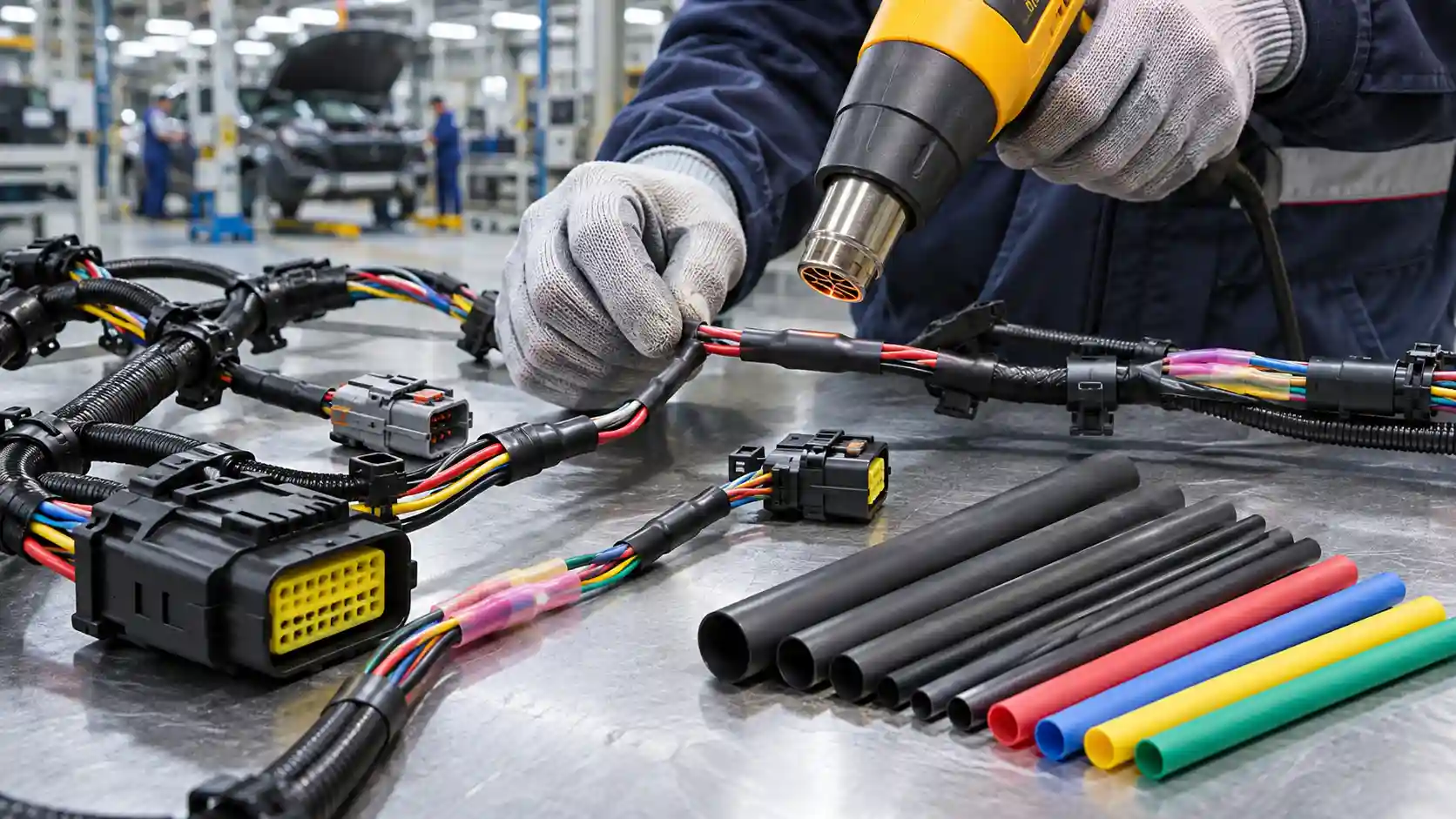
The electrical circuitry of a car has many wires and connections which require adequate insulation and protection. All wires from engine wiring to dashboard connection have their unique function and any slight damage to any wire will lead to malfunction in the circuitry. The wires are always subjected to vibration, heat, moisture, and friction especially when passing through tight places and next to moving parts. Ordinary insulation might not always be enough in such conditions.
This is why it is suggested to use a WOER heat shrink sleeve for automotive wiring application. The sleeve is used to cover wires and electrical connections when heated up and provides insulation and mechanical protection. Choosing a correct sleeve for the automotive cable harness is important considering the size of the cable, shrink ratio, temperature resistance, and the surroundings.
What Makes WOER Heat Shrink Sleeves Suitable for Automotive Wiring?
The WOER heat shrink tubing is meant for the coverage of electrical wires and joint and connection points through shrinks on them upon application of the recommended heat temperature. This tubing is produced in an expanded form, which is allowed to contract when used in order to fit onto the underlying cable or other parts.
This automotive heat shrink sleeve provides an added electrical insulation layer, as well as protecting the wiring from such issues as abrasion, dust, accidental touch, etc., depending on the product construction. The automotive heat shrink sleeve may also be used to cover exposed wire joint areas and organize cable assemblies.
Thus, it is important to select an automotive heat shrink sleeve according to the application site in your vehicle. WOER sleeves of the various series have different materials, different shrink ratios, different wall thickness and operating temperature ranges. You need to see the data sheet for the specific sleeve in order to choose it properly.
Where Are Heat Shrink Sleeves Used in Automotive Cable Harnesses?
The wire protection for different parts of an automobile wiring system varies. The automotive cable harness protection is an appropriate protection that takes care of electrical connection and proper cable harness routing.
Protecting Wire Splices and Electrical Joints
In assembling automotive wiring, there can be instances where two or more conductors must be connected to form an electrical circuit. A heat shrink sleeve for wire splice is employed as insulation for the exposed splice after the conductors have been successfully spliced together.
By heating as per the guidelines, the sleeve shrinks to form an additional protective layer over the exposed splice. This helps to provide protection against any unintended contact and wear.
Heat shrink sleeves are beneficial when doing wiring repairs, wiring extensions and even automotive wiring harness manufacturing. The sleeve size to be employed needs to be verified to ensure proper coverage of the splice.
Sealing Connector-to-Cable Transitions
Another place that needs extra protection is where the cable connects to the connector. Moisture, dirt, and wear and tear may damage these connections when installed in parts of a vehicle that are open to the elements.
In adhesive lined heat shrink tubing, there is a lining which gets melted when heated to form a seal between the sleeve and the wire/connector. It is often employed as a method to deal with problems related to connector backshells, cable exits, and other wiring transitions.
A well-chosen heat shrink sleeve for automotive connectors will decrease moisture intrusion around the connector. Nevertheless, how effective the sealing process will be depends on various factors.
Supporting EV and Automotive Sensor Wiring
Modern cars use several electronic systems for monitoring, communication, and control. The wiring connections required for these systems require proper insulation and protection. Thus, EV wiring harness protection is an important factor in protecting low-voltage wiring for sensors, controls, and additional electrical components.
Suitably selected automotive wire insulation can be helpful in providing protection for the cables of sensors and the electric joints from abrasion and environmental factors. Heat shrink tubes can also be used for covering the cable connections and organizing wiring connections.
But the electrical insulation of high-voltage EV batteries and traction systems is different. So a general heat shrink tube cannot always be applied in such applications. The compatibility of the product should be checked before the installation.
Single-Wall vs Dual-Wall WOER Heat Shrink Sleeves
Heat shrink sleeves are offered in various constructions based on the degree of protection needed. Single-wall and double-wall versions are often recommended for electrical insulation and cable sealing purposes.
| Comparison Factor | Single-Wall Heat Shrink Tubing | Dual-Wall Heat Shrink Sleeve |
|---|---|---|
| Construction | Single polymer layer | Outer polymer layer with inner adhesive |
| Adhesive Lining | Generally not included | Included |
| Main Purpose | Insulation and cable covering | Insulation and additional sealing |
| Moisture Protection | Depends on material and installation | Can provide improved sealing when properly installed |
| Applications | General wire covering and identification | Cable joints and connector transitions |
| Selection Factors | Diameter, wall thickness and temperature rating | Shrink ratio, adhesive properties and sealing requirements |
Single wall heat shrink sleeve is normally appropriate in the case where the foremost requirement is to cover cables as well as to insulate or protect cables from physical contact.
Contrastingly, the dual wall heat shrink sleeve includes an adhesive layer in its structure that ensures better bonding to cable in the process of cable repair. That is why this type of sleeve can be used where environmental protection is additionally required.
This particular sleeve can also be selected where wire splicing, connector transition and moisture exposure of the connection is expected. The choice of one or another sleeve is determined by the operating environment and the size of cable that needs to be protected. It is important to compare the characteristics of various product lines not just to choose the sleeve type.
How to Choose the Right WOER Heat Shrink Sleeve for a Cable Harness
Prior to buying, it is advisable for automotive engineers and bulk purchasers to look at the cable dimension, mounting area, working environment, and mode of protection. WOER heat shrink sleeve selection will ensure proper fitting and no wastage of materials.
Match Shrink Ratio with Cable and Connector Dimensions
The heat shrink ratio determines how far the expanded tube can shrink when heated. This can be 2:1, 3:1 or 4:1, depending on the particular series.
In this case, the 2:1 ratio sleeve is capable of shrinking to almost half of its expanded diameter under the given recovery conditions. Sleeves having ratios of 3:1 or 4:1 have greater range of shrinkage and may be suitable for applications where the diameter of the covered connectors or cables varies.
When choosing between heat shrink tubing sizes, one must take note of both the expanded and recovered dimensions. The expanded dimension must be big enough to slide on the connector, while the recovered dimension will have to fit around the cable.
This is especially critical in automobile harness assembly where several cables need to be connected using various connectors. Using the wrong size will create loose fits.
Check Operating Temperature and Material Properties
The heat shrink temperature rating should also conform to the conditions in which the sleeve will be used. The wires may be located in diverse areas in an automobile, and those close to the engine parts or other heat-generating components may face higher temperatures as compared to the wires in the automobile cabin.
Apart from heat resistance, consumers should also take into account flexibility, abrasion resistance, and fluid-resistance capabilities when applicable. They will differ depending on the product line being considered.
For reliable automotive cable insulation sleeves, the following information should be known through reference to the datasheet issued by the company: operating temperature range, recovery temperature, material used, and mechanical requirements.
Consider Adhesive Lining and Environmental Sealing
Adhesive lined heat shrink sleeve will be an appropriate choice to consider when it comes to providing a cable joint with extra protection from moisture and foreign materials. While being heated, its inner adhesive melts, and that aids in shrinking the sleeve onto the cable.
In some cases, waterproof heat shrink tubing is needed for protecting wiring, especially in case there is a risk of water contact with it. Yet, not all heat shrink sleeves offer the same level of waterproofing.
It depends on the type of adhesive, heat shrink sleeve specifications, cable fitting, etc. Customers are advised to pay attention to the sealing capabilities when choosing such a product for automotive wiring.
Common Specification Mistakes in Automotive Harness Projects
Small errors in material selection may lead to some complications during the installation process of cable harnesses. There are some features which buyers need to consider when evaluating automotive heat shrink tubing:
- Selection based on expanded diameter only: The recovered diameter also needs to fit the cable or connector.
- Ignore the recovered wall thickness: The final wall thickness determines the insulation and mechanical coverage provided by the sleeve.
- Believing that all WOER sleeves are automotive-grade: The performance and application range vary from series to series.
- Ignores the need for adhesives: The standard single-wall tubing and adhesive-lined sleeves cannot provide the same level of sealing.
- Ignore the temperature conditions: The chosen material should fit the working conditions.
- Doesn’t verify installation requirements: The wrong heating process may affect the sleeve, cable insulation and other surrounding parts.
Considering the heat shrink sleeve specifications prior to purchasing helps the buyers select the appropriate material.
Sourcing WOER Heat Shrink Sleeves for Automotive Projects
It is important for automotive component suppliers, electrical assembly units and cable harness suppliers to have consistency in the choice of materials in planning production. When approaching WOER heat shrink sleeve suppliers in India, you must provide the specifications of the products you are interested in to make their choice easier.
SS Electronics provides electrical and electronic components for industrial purposes and assists customers in choosing appropriate products that suit their purpose. In making a quotation request, it will be helpful if you tell them about the WOER series that is required along with the other specifications such as heat shrink ratio and the amount required.
It will also be good to consider product availability, packaging and delivery details when comparing the WOER heat shrink sleeve wholesalers or looking for an automotive heat shrink tubing supplier.
Conclusion: Choose Protection That Matches the Harness
Factors to consider when selecting the correct WOER heat shrink sleeve for automotive wiring include cable size, shrink ratio, high temperature tolerance, material characteristics, and sealing requirements. Single wall sleeves are ideal for general insulation purposes, whereas dual wall sleeves are suitable when moisture sealing is necessary.
|
SS Electronics assists in finding suitable WOER heat shrink products that will serve automotive wiring and cable harness applications. Look at the available product specifications and inquire regarding the series and sizes you need. |
Frequently Asked Questions
1. What is the difference between standard and adhesive-lined heat shrink tubing?
The heat shrink tubing is used as an insulating cover for wires and cables. The adhesive lined heat shrink tubing, on the other hand, has an additional feature of having an adhesive lining inside the tubing.
2. Can WOER heat shrink sleeves be used in electric vehicle wiring?
Of course, you can definitely use the right series of products for low voltage EV wiring, sensors, and auxiliary harnesses. However, for high voltage, the products should meet the specifications.
3. How do I select the correct heat shrink sleeve size?
The diameter expansion, recovery diameter, shrink ratio, and recovered wall thickness are things to check. The sleeve needs to cover the connector and shrink around the cable/electrical joint.
4. What is the difference between 2:1, 3:1 and 4:1 heat shrink ratios?
The shrink ratio is determined by the extent to which the tube will be able to shrink from the initial size. The 2:1 shrink ratio is below the 3:1 and 4:1 range that will be needed to cover more variations in size.
5. Does heat shrink tubing protect automotive wires from moisture?
Yes, some heat shrink tubing products, specifically those with an adhesive lining, can actually help protect the wiring of automobiles from moisture exposure. It all boils down to the actual structure of the product used.
6. Can heat shrink sleeves be used for automotive cable harness repairs?
Yes, indeed, the proper heat shrink tubing could be applied to insulate wire connections as well as jointed wires with the damaged insulation. The chosen type of heat shrink tubing must fit the cable specifications.